Getting Drunk Please Mardi Gras Graphics for T-Shirt Designs
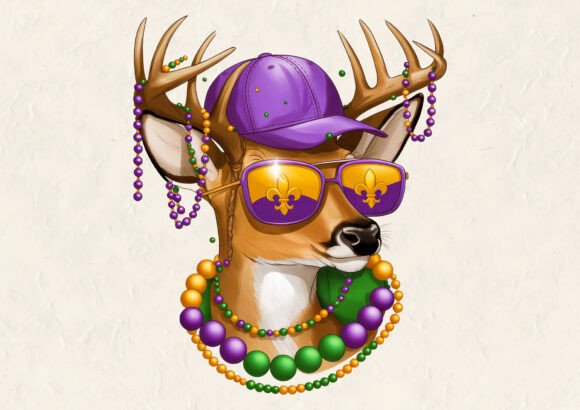
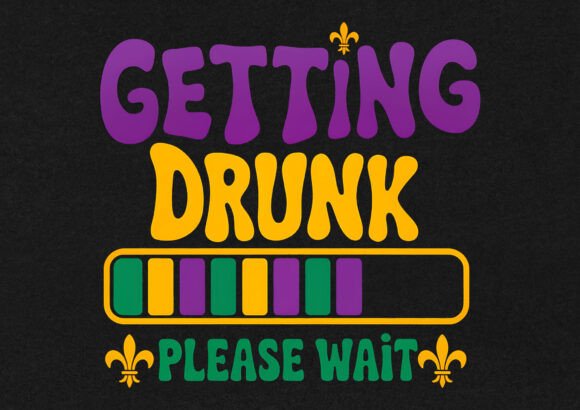
The first time I pulled up Getting Drunk Please Mardi Gras T Shirt, I was already deep into planning a seasonal collection for a print-on-demand store that leans heavily on humor and event-based designs. I needed something that didn’t just whisper “Mardi Gras”—I needed a visual that would stop a scroller mid-feed and make someone chuckle or tag a friend. This asset isn’t a subtle, elegant fleur-de-lis pattern. It’s loud, unapologetic, and built for buyers who wear their party mood front and center. As a single PNG file, it immediately forces you to think about how you will place it, test it, and present it across multiple product types before any listing goes live.
The Personality the Asset Brings to a Product Line
From a digital product creator’s perspective, every design must carry a mood that aligns with a clear buyer persona. This one isn’t formal, minimal, or generic. It communicates a playful, slightly mischievous energy that fits perfectly into Mardi Gras party culture, bachelorette weekends, New Orleans-themed events, and Southern-inspired gift shops. The lettering style and any decorative accents attached to the phrase “Getting Drunk Please” read as festive rather than aggressive. There’s a wink behind the words. I could see this working for a customer who wants a matching group tee, a humorous hoodie for a parade, or a statement mug for a hostess gift. The mood is bold and social—exactly the kind of energy that performs well in impulse-buy categories and seasonal promotions.
Testing the Design Across My Product Idea Board
Before I even consider uploading a design to an Etsy shop or a Printify catalog, I run it through a quick mockup gauntlet. With Getting Drunk Please Mardi Gras T Shirt, the seller describes it as suitable for t-shirts, banners, posters, backgrounds, hoodies, mugs, caps, stickers, and more. That’s a broad claim, so I tested its placement logic in my own workflow. The file is a single 4500×5400 pixel PNG at 300 dpi, print-ready and carrying what appears to be a transparent background. That large canvas gives me enough resolution to scale down for a mug wrap or a cap without losing crispness, and I can easily expand a background layer if I need a poster layout.
Mockup Strategy for Marketplace Thumbnails
On a white t-shirt mockup, the graphic pops instantly. On a dark heather hoodie, I had to check edge contrast because some festive designs rely on bright colors that can get muddy or disappear if the print doesn’t include a white underbase. What I liked: the transparent PNG let me drop it directly onto a mockup background without masking away a white box. That alone saves time. For listing thumbnails, the design’s wording is legible even at reduced sizes, which is critical for Etsy search results and mobile shopping. I will always preview it at thumbnail dimensions before finalizing any product entry.
Where the PNG Format Shines and Where It Creates Limitations
Because this asset arrives as one PNG file, it aligns perfectly with print-on-demand processes, sublimation transfers, digital downloads for crafters making iron-on projects, or printable wall art. The high resolution means I’m not fighting pixelation even when a customer wants a 15-inch wide print. However, this is not an SVG bundle. If you plan to sell a Cricut-ready cut file or a layered Canva template, you will need to trace the design yourself or pair it with additional vector assets. This limitation doesn’t ruin the asset—it simply shapes which product categories to target and how you describe the digital download to your customers.
Print-on-Demand Fit and Color Checks
For direct-to-garment printing, I always order a sample or at minimum run a soft proof in a simulated CMYK environment. The Mardi Gras palette—likely purples, greens, golds—can shift when converted from RGB. With Getting Drunk Please Mardi Gras T Shirt, I tested a quick sublimation preview on a white mug and a polyester tote. The colors retained their vibrance in simulation, but I’d still recommend anyone selling physical products to order a single test print. For dark fabric, you’ll want to verify whether the PNG’s transparency behaves correctly in the POD software’s rendering engine. Some platforms automatically apply a white knockout, others don’t. A quick upload test on Printful or Printify will answer that.
Building a Seasonal Collection Around a Single Graphic
Most of my revenue doesn’t come from selling one design on one product. I build themed bundles. Getting Drunk Please Mardi Gras T Shirt works as a hero graphic for a small capsule collection. I would place it prominently on a unisex t-shirt, a hoodie, and a mug. Then I’d supplement with coordinating designs—maybe a simpler fleur-de-lis pattern, a matching “Mardi Gras Crew” text-only design, or a set of printable banner letters. By having a strong central asset, I can create listings that cross-link and raise average order value. The PNG file can also become a background element for a digital party invitation or a social media template pack if expanded with some Canva edits.
The Single-File Expectation Conversation
When selling this as a digital download on Etsy or Creative Fabrica, I would be extremely clear in the listing that the customer receives one PNG file. Not an SVG, not an editable text template, not a layered PSD. That transparency prevents disappointment from Cricut users who expect a cut-ready file. For my own shop, I would likely package it with a simple commercial-use guide and a screenshot of how it looks on different mockups. Commercial license terms from the original designer must be checked, too—always confirm that you’re allowed to use the design on products you sell, and keep documentation in case of disputes.
Practical Notes Before Publishing Any Product With This Asset
There are always checks I perform before a listing goes live, and Getting Drunk Please Mardi Gras T Shirt is no exception. First, I open the PNG in multiple environments—Photoshop, Affinity, and Canva—to ensure the transparency is clean and there are no stray white halos around the lettering. Second, I test the file on a dark product mockup and a very light one. Third, I check the legibility of any small accent text when the graphic is shrunk to sticker size (around 3 inches wide). That’s where a raster file shows its soft edges. For a 3-inch sticker, the design still holds up if it’s primarily bold typography, but I wouldn’t shrink it further without converting to vector or sharpening the edges.
Areas Where I’d Use Extra Caution
- Tiny sticker sheets: The text may start to blur if scaled below 2 inches. A vector trace would be cleaner.
- Overly busy backgrounds: When placed on a heavily patterned tote bag, the message might compete with the fabric. I’d keep product backgrounds simple.
- Dark-on-dark color combinations: If your mockup applies a black shirt, the purple and gold might still read, but a navy or charcoal could swallow details. Always test.
- Cricut or Silhouette cut lines: Without an SVG, you rely on auto-trace, which can create messy paths around distressed or textured lettering.
How This Fits Into a Real Online Shop Workflow
Imagine you’re a print-on-demand seller preparing for Mardi Gras season, with a tight launch window. You don’t have weeks to design from scratch. You buy Getting Drunk Please Mardi Gras T Shirt, drop it into a few mockups, and immediately see a cohesive product set. I’d spend an afternoon creating a t-shirt listing, a hoodie listing, a mug listing, and a printable banner listing—all using this one PNG as the core graphic. Then I’d duplicate and tweak for variations in layout. For Etsy, I’d photograph the designs on physical mockups or use high-quality mockup templates that show the design in context. The transparent background allows me to place it onto lifestyle scenes without awkward white borders, boosting perceived value.
The Role of This Asset in Broader Creative Projects
Beyond t-shirts and mugs, I’ve found that festive phrase-based designs can double as printable party decor, digital scrapbook elements, or even stream overlays for content creators celebrating a Mardi Gras charity stream. The resolution is generous enough to create a desktop wallpaper or a blog header graphic. I would test it as a horizontal banner by adding a colorful background in Canva, stretching the canvas to 1500×500 pixels. That flexibility means one download can pull double duty across product types and marketing channels, making it a versatile pick for a small business owner who needs both merchandise and promotional visuals.
Final Thoughts From a Seller’s Perspective
Getting Drunk Please Mardi Gras T Shirt is not a multi-format design bundle, and it doesn’t pretend to be. It’s a single, high-resolution PNG with a clear seasonal message and a confident visual tone. For a digital product creator focused on quick-turn seasonal collections, that’s often exactly what you need. It removes the guesswork from composition and lets you concentrate on product placement, color tweaks, and listing optimization. I’ll be adding it to my own Mardi Gras lineup, but only after verifying the print-on-demand color behavior and packaging the file clearly for the end customer. If you’re selling finished products or digital downloads where a bold, party-forward phrase fits, this asset can hold its own as a hero graphic and even anchor a small holiday bundle. Just make sure your shop description sets accurate expectations about the file type, and you’ll avoid the most common customer-service hiccups that come with single-asset listings.